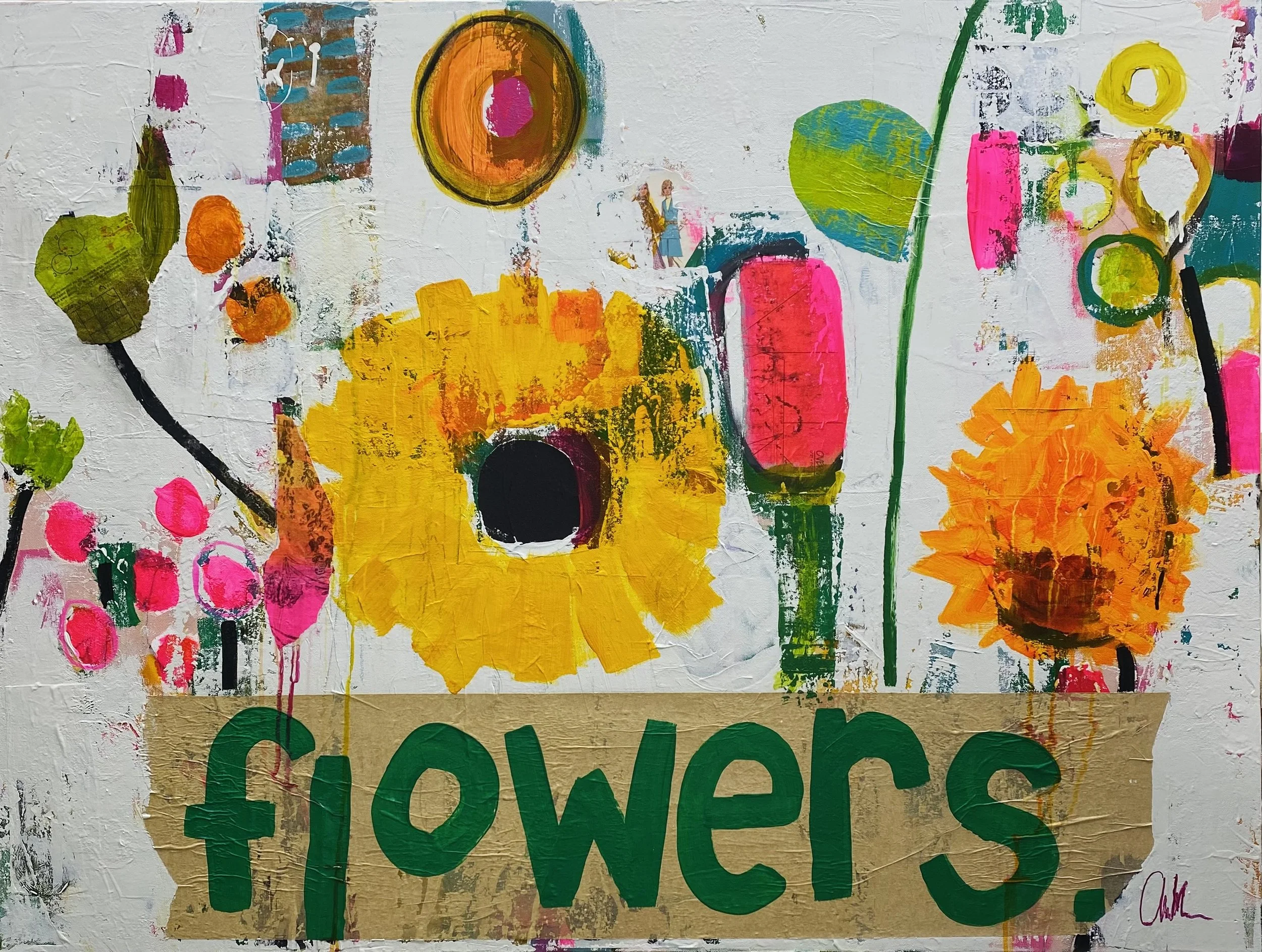
I've been painting for longer than I've been writing about Transformative Creativity, and the two are more connected than I understood for a long time. The paintings came first. The framework came later. In a lot of ways, my art practice was doing the work of the methodology before I had language for any of it.

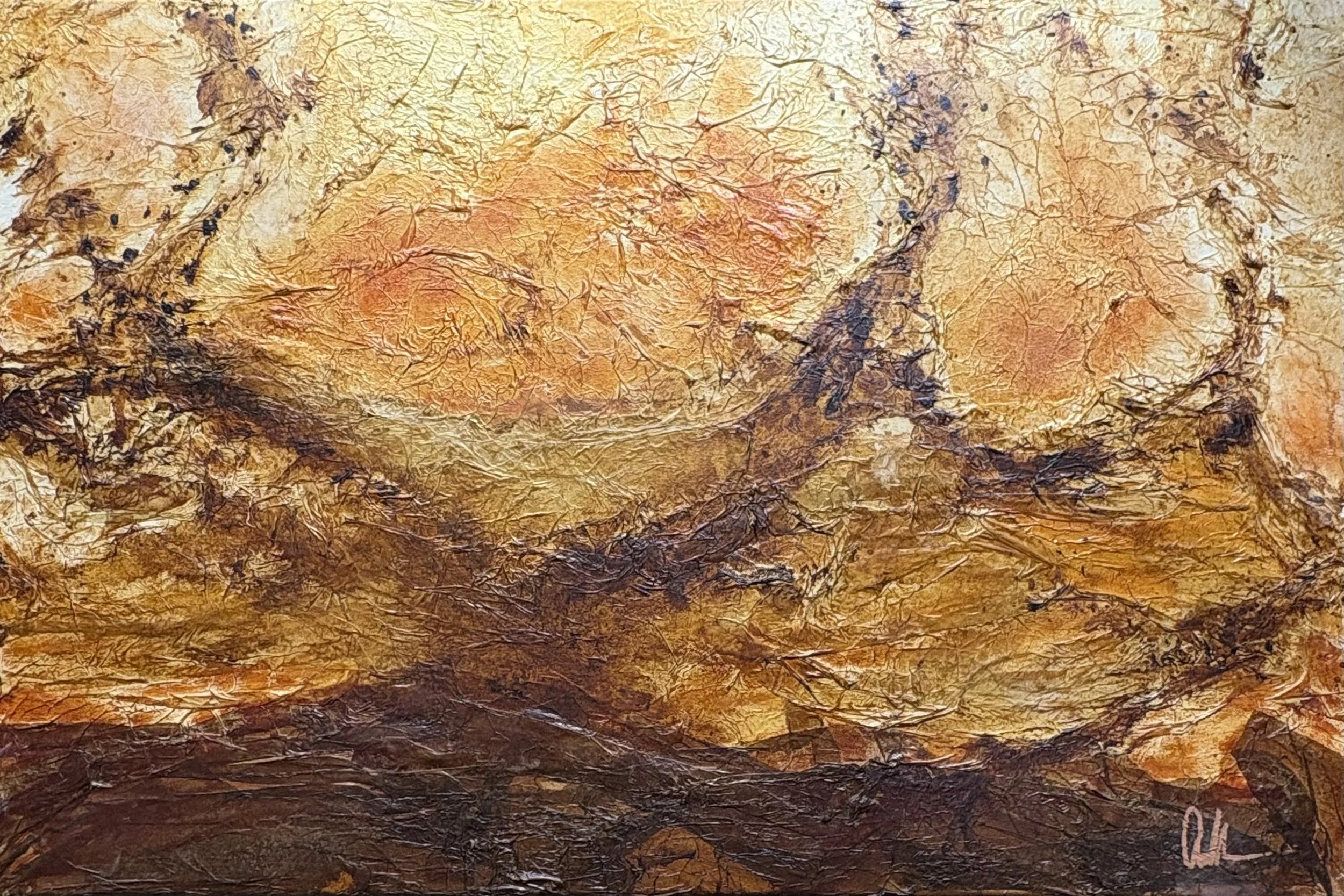
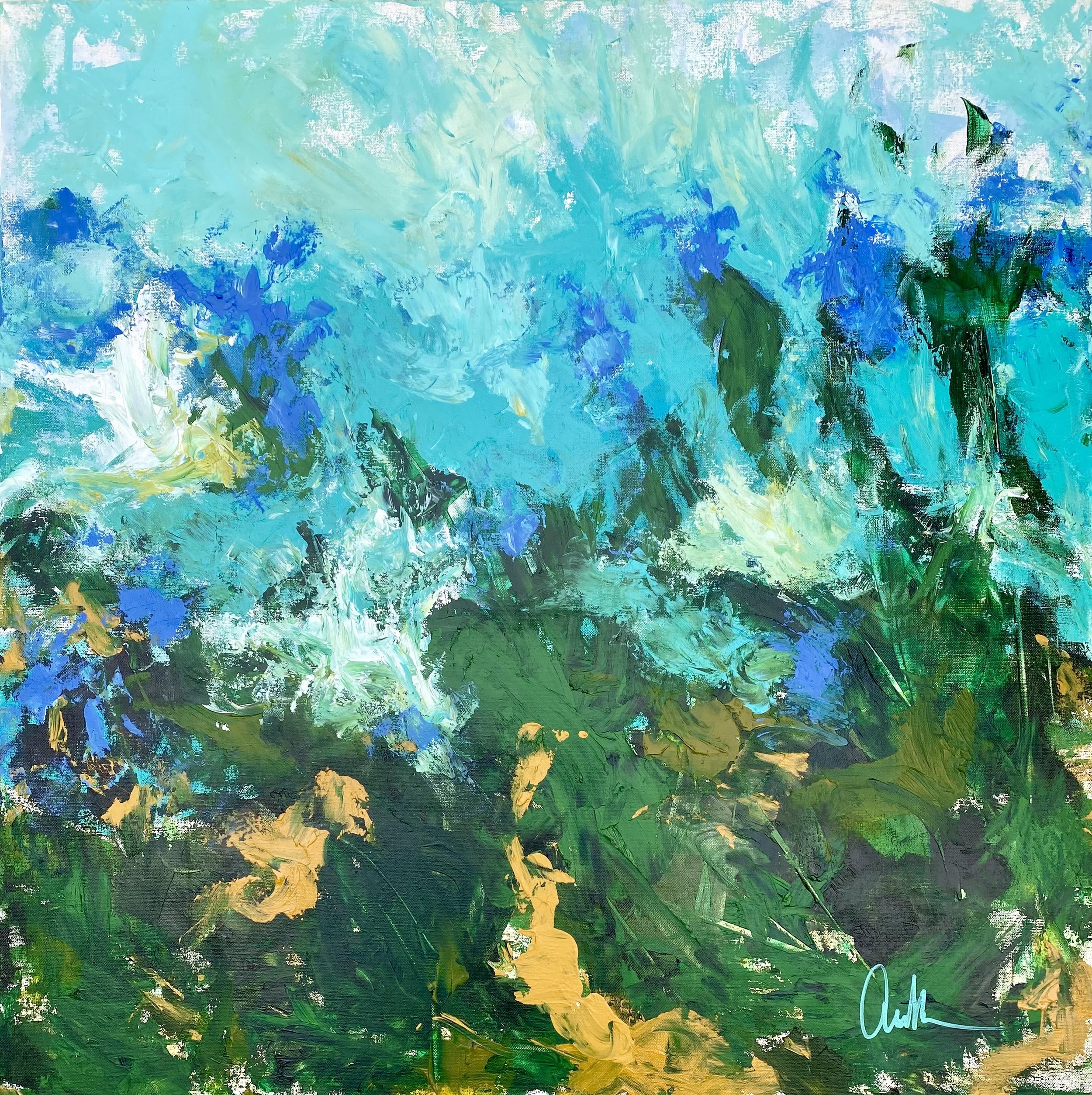
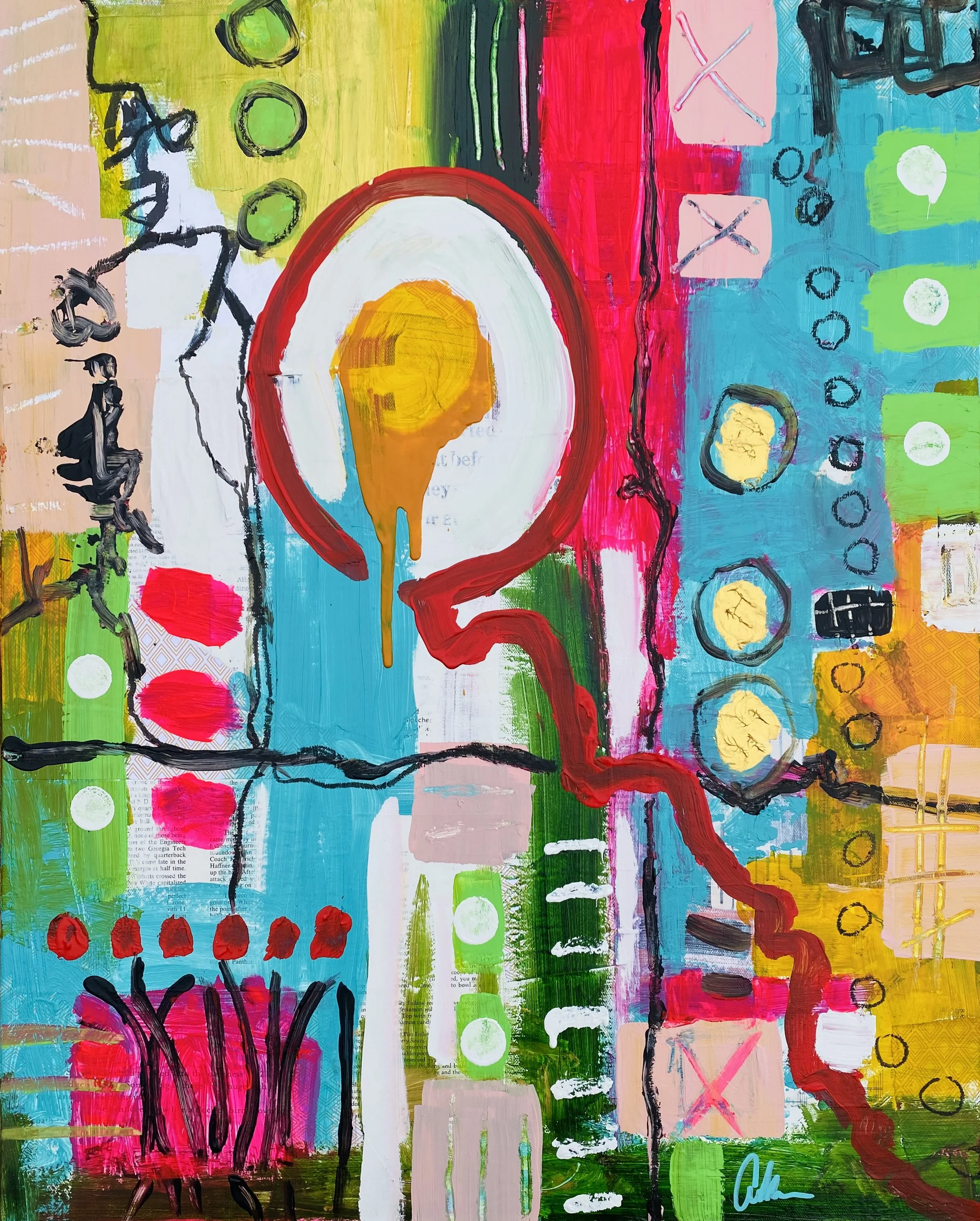
What you'll see here is mixed media, mostly acrylic with paper, collage, found materials and whatever else ends up on the canvas. I paint the way I think: in layers, with a lot of revision, and with the understanding that the mess is where the good stuff lives.

Featured Collection:
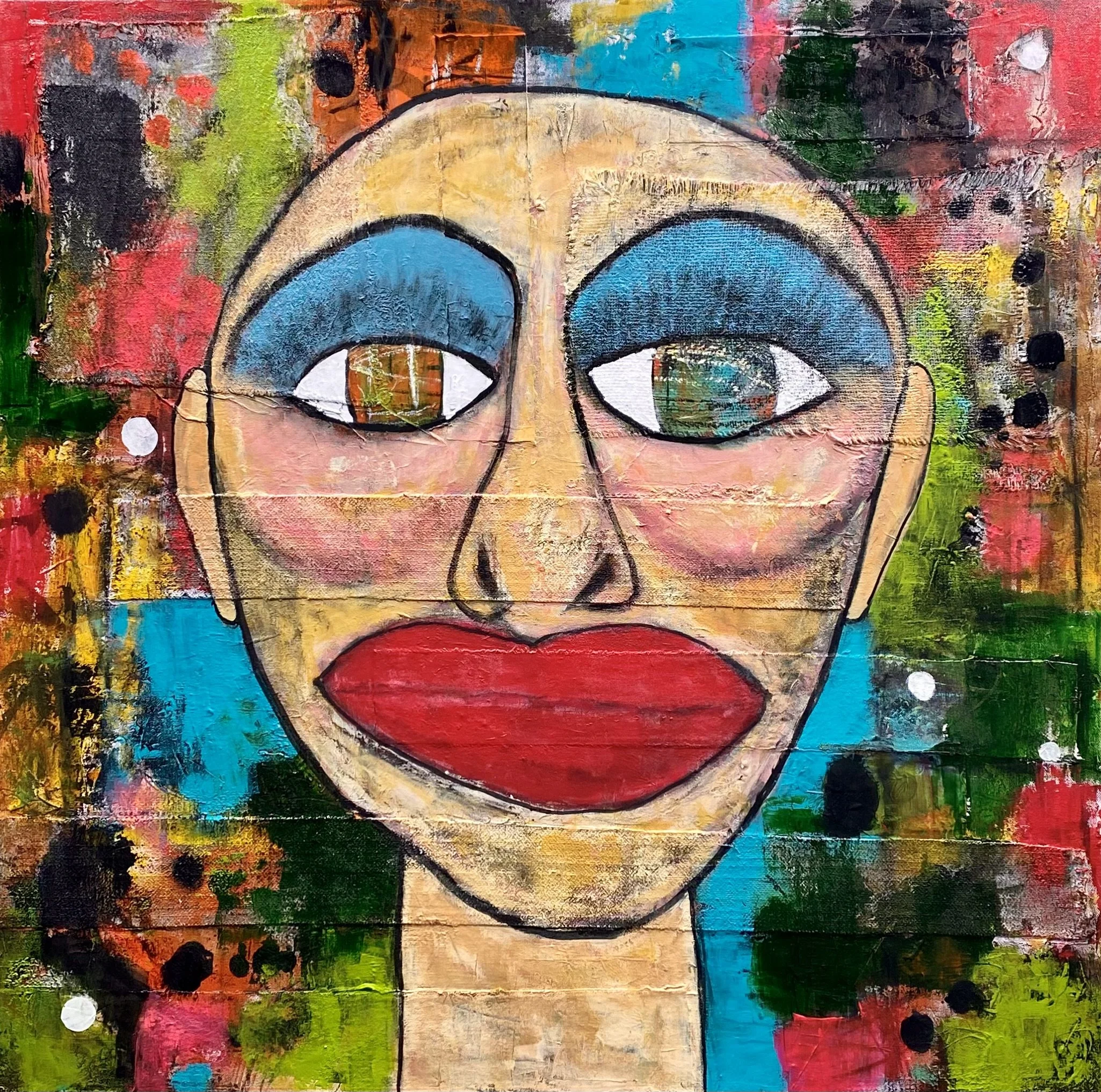
The Many Faces of Us

Two years before I knew Transformative Creativity was a thing, I painted eleven faces.

I didn't plan to paint a series. I didn't have a concept or a theme or a vision for what they'd become. I just started painting faces and couldn't stop. One led to another led to another. Eleven portraits over the course of a few months, each one emerging with its own story that I didn't write so much as receive.

Each face represents a character navigating something difficult: a nervous system under strain, an identity splitting, a protective pattern that once made sense but was starting to cost more than it gave. I didn't understand then that what I was doing was regulating my nervous system through creative expression. I just knew that painting made me feel better. And that the stories I was writing for these characters were, in a lot of ways, stories I was writing for myself.

When I eventually looked back at these portraits through the lens of the framework, I saw something I hadn't seen before. The paintings already knew. They were mapping the five phases of Transformative Creativity years before I had words for any of it.

This series is the spine of the book and the origin of everything else on this site.

One Good Eye

The only thing he knew for sure was that he couldn’t watch or read the news anymore.

It’s not that he didn’t care; it was that he cared too much and “too much” was the perfect way to describe the world right now. There was too much violence, too much suffering, too much fear, too much greed, too much apathy, too much arrogance, etc. The list went on and on…

This wasn’t new news.
In fact, it was as old as time.
What was new were the number of people who were waking up to the fact that the world is broken.

He’d been among the early adopters, in that regard. He’d always known or at least sensed that things were not as they seemed, that all that glittered wasn’t gold, that the emperor was indeed not wearing any clothes.

Now, the chaos seemed to be reaching a crescendo and those that had always been so confident in their ability to keep bad things from happening to them were beginning to question that assertion.

The questioning alone was enough to set the wheels of change in motion. But change never comes easily or without a cost, and the benefactors of the way things had always been weren’t going to go down without a fight.

And so it began.

And every time it seemed as if things might finally be getting better and there was cause for hope, something else fell apart and and back the world would go:

To rejecting.
To blaming.
To hating.
To killing.

And every time something else fell apart, he’d feel the same way:

Angry
Vindictive
Overwhelmed
Sad
Powerless
Numb

Even though deep down inside he knew that all was as it should be and would eventually serve a greater good, he just couldn’t watch anymore.

“Sometimes you have to turn a blind eye to the bad”, he said. “Before you stop being able to see anything good.”

The Better to Hear You With

He’d spent his whole life trying to fit in. He knew he was different and he hated it. All he wanted was to be normal and cool.

He looked around at all the perfect people and wondered how they made it look so easy. They just always seemed to pick the right thing: the right clothes, the right job, the right friends, the right everything. They posted the right things on social media, and said the right things at parties, and smiled and laughed at just the right time in every conversation.

They were perfect. And he knew if he could just be more like them, he’d be perfect too.

He put all his time, effort and energy into being less: less messy and loud and colorful and transparent and every other thing that had always made him feel so much less than everyone else.

But becoming less didn’t make him feel perfect.
It made him feel hollow.
And that was worse.

So he stopped.

He stopped comparing and imitating.
He stopped hiding and pretending.
He stopped censoring and silencing.

It wasn’t easy.

He had to accept some things…
That he was never going to fit in.
That he was never going to feel completely comfortable in his own skin.
That some people would never understand, approve of or appreciate him for who he was.
That sometimes he’d feel self-conscious or lonely or scared.

“Small price to pay”, he told himself, “for the privilege of being me”.


Our work speaks for itself

Our work speaks for itself —